Home > Journey to the West > 16-kingdom-of-wuji

16 The Kingdom of Wuji

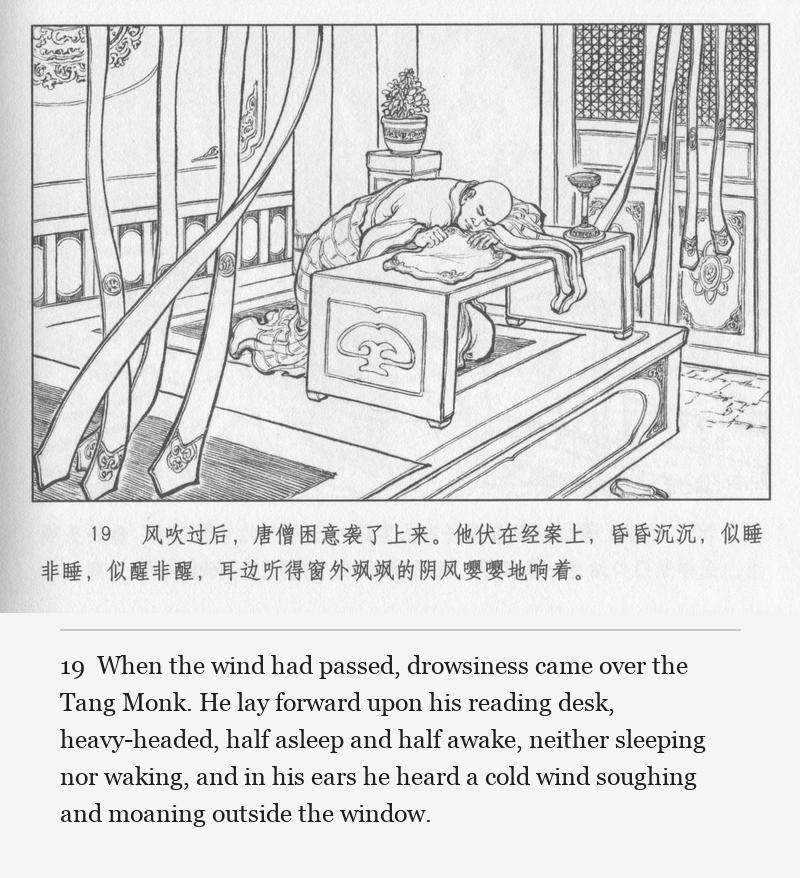
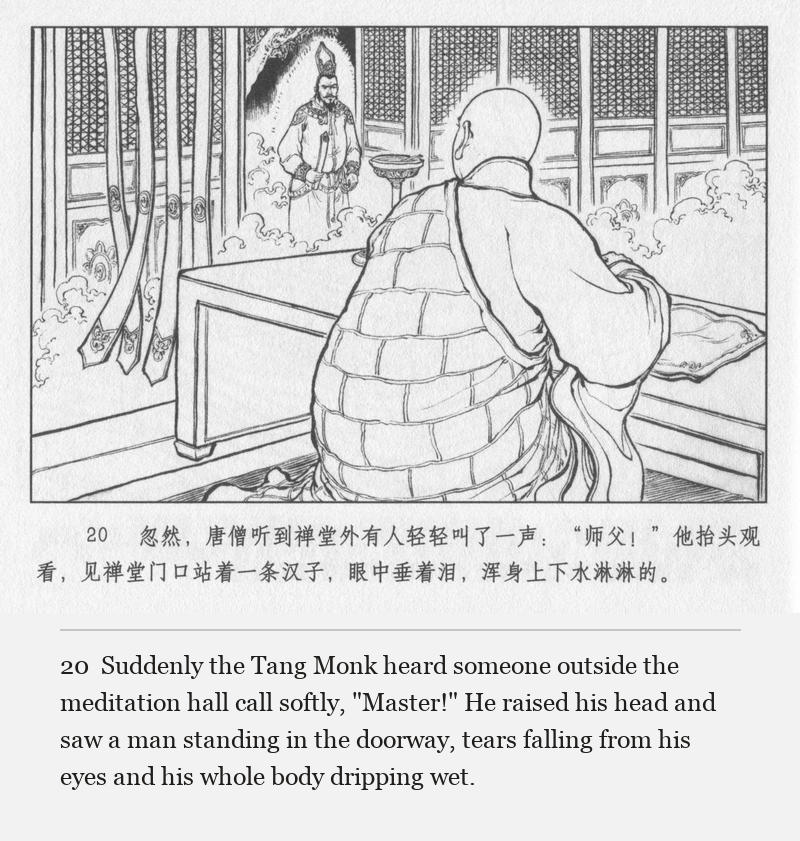
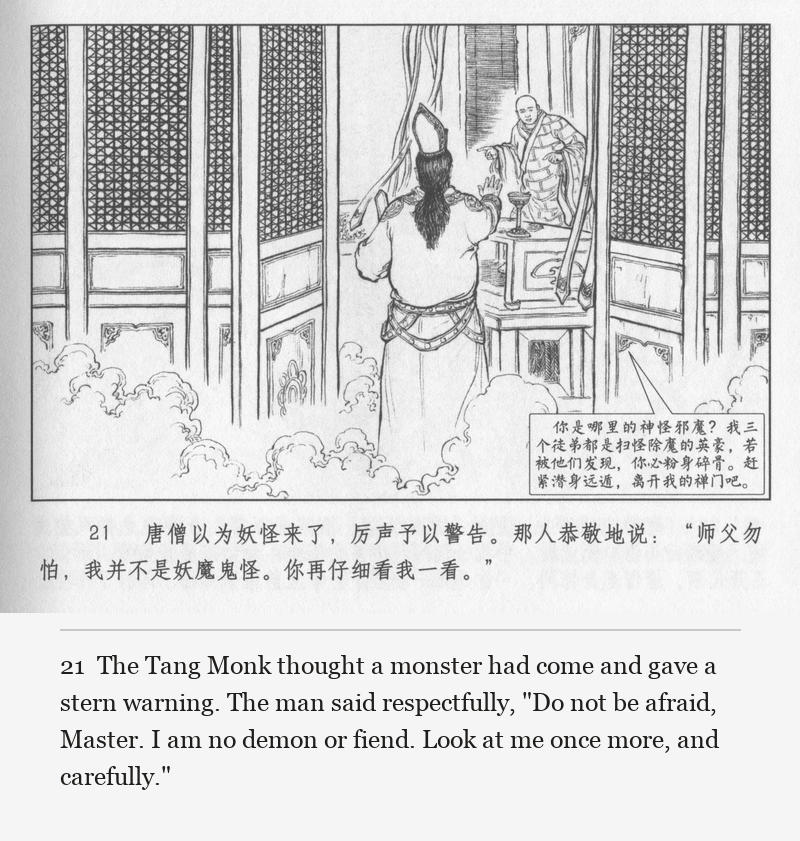
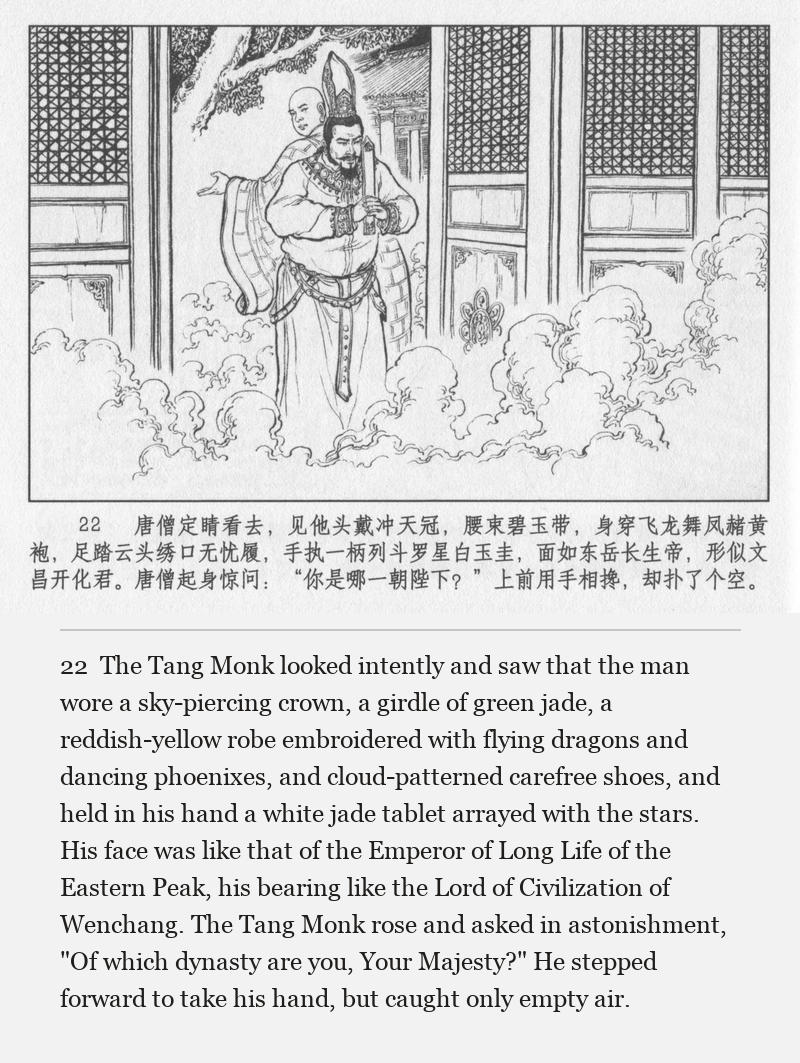
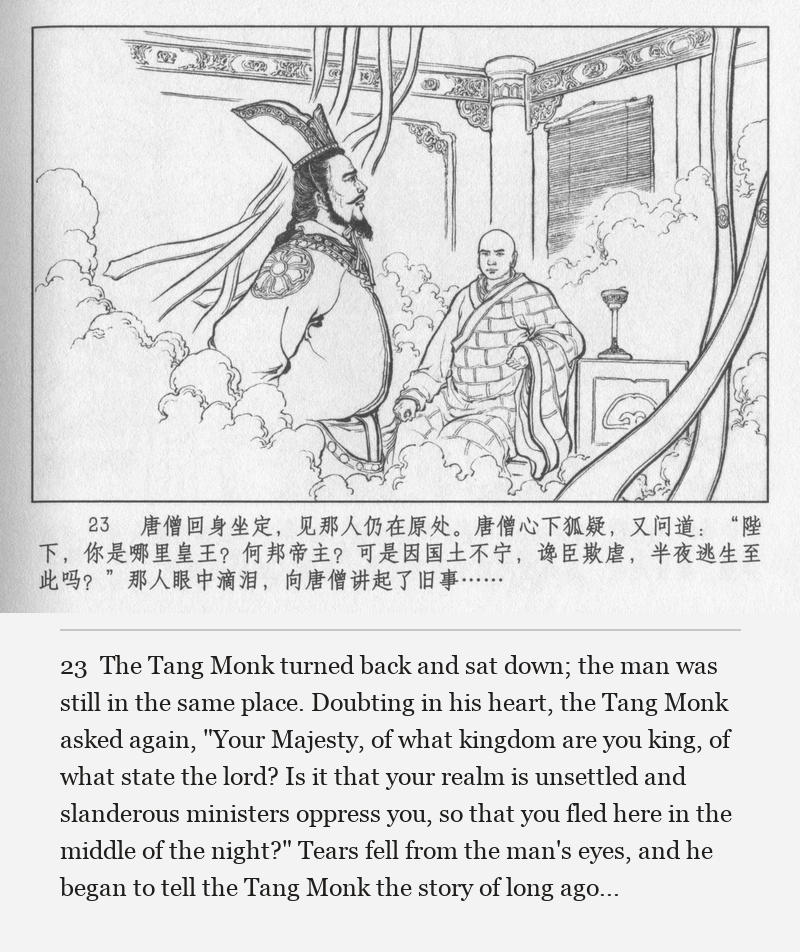
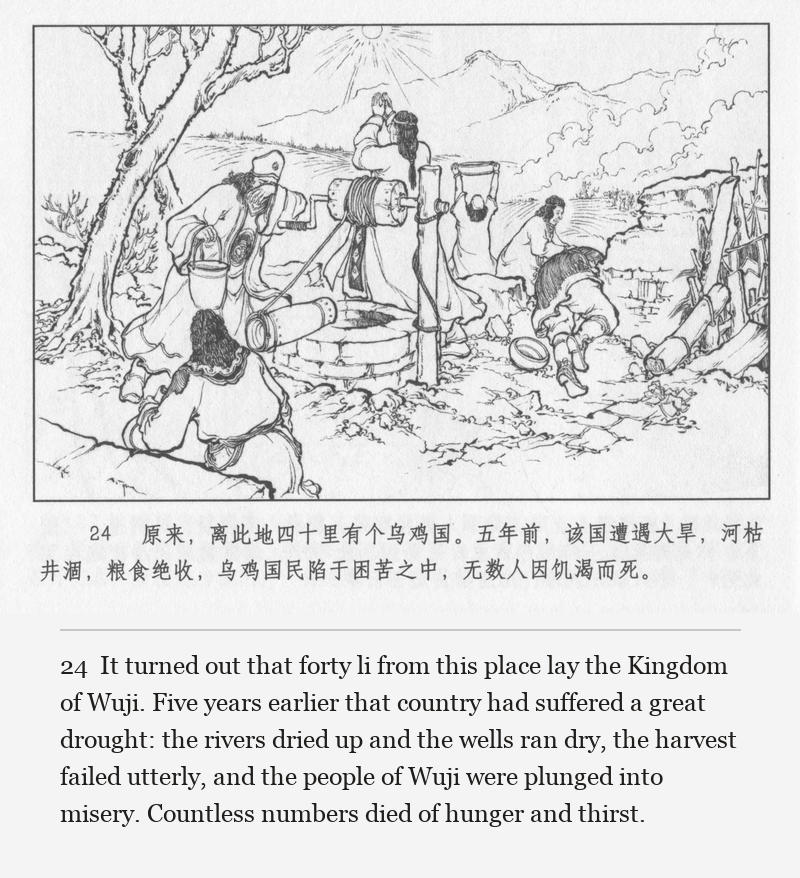
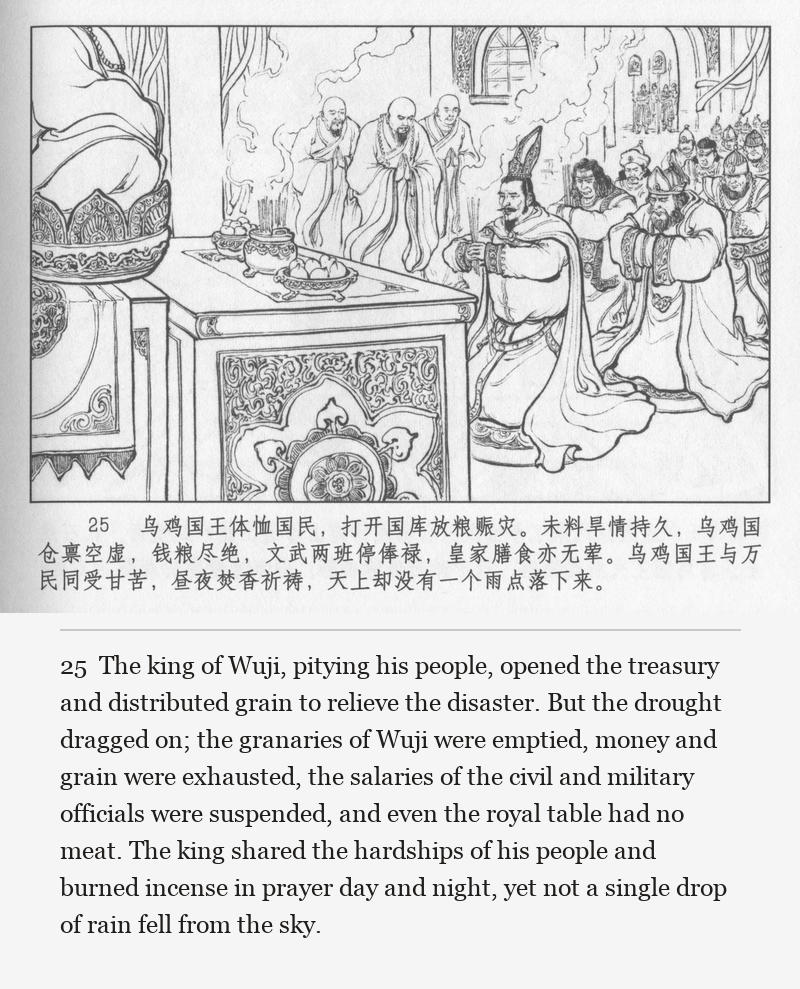
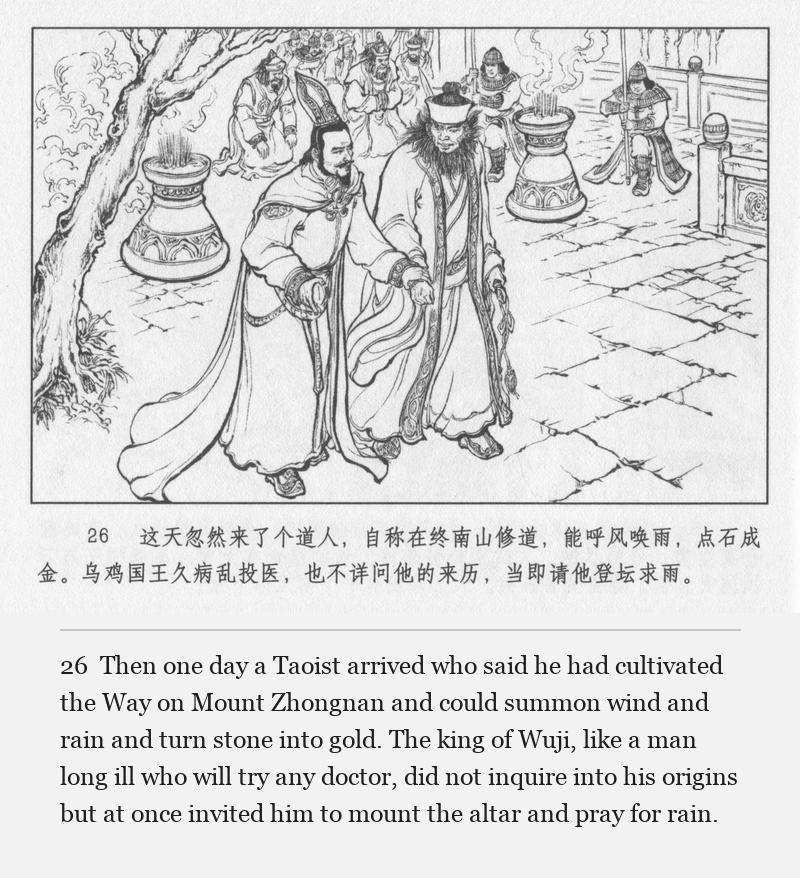
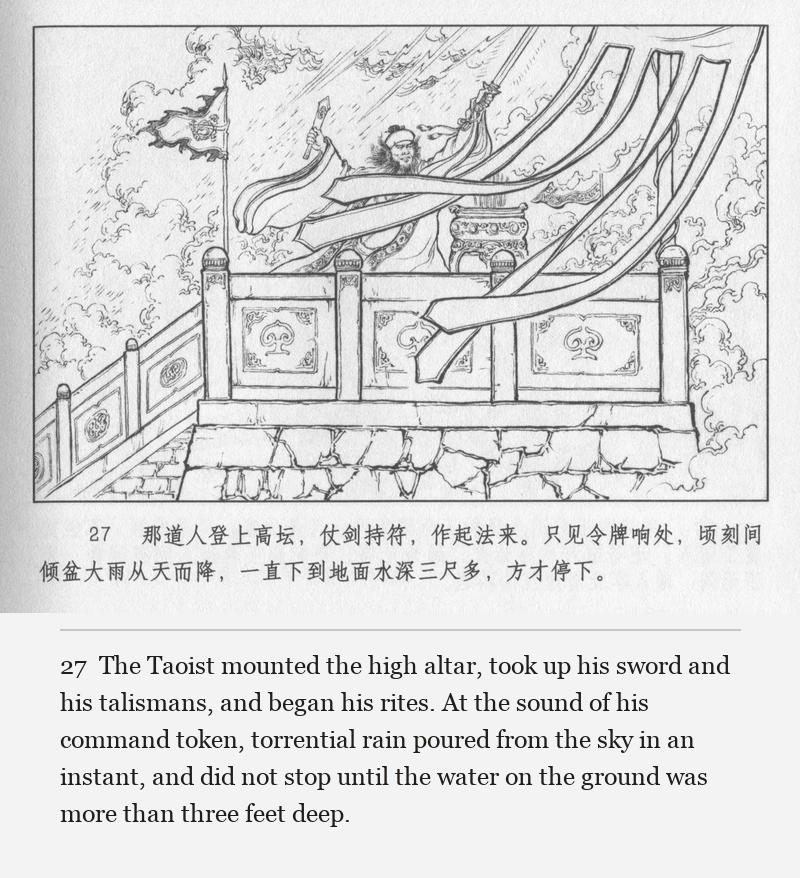
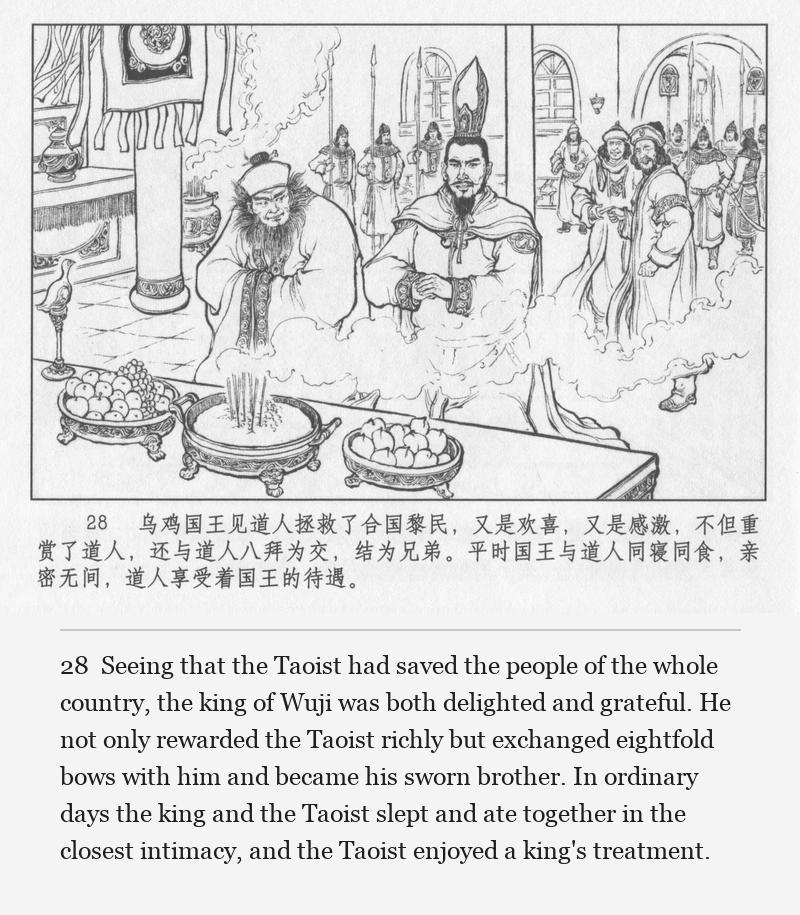
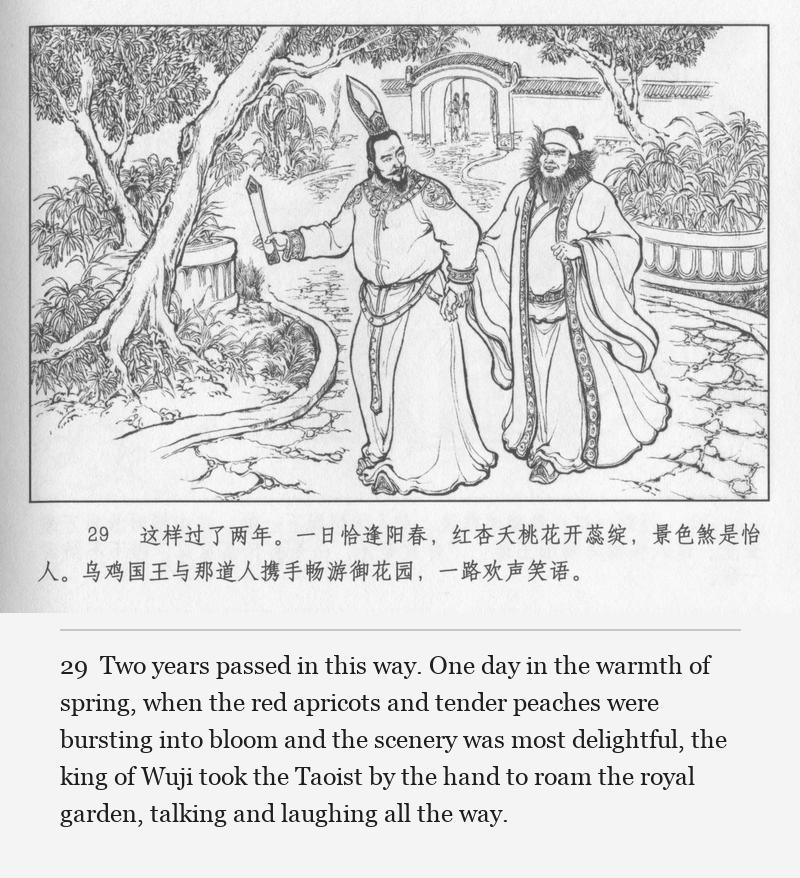
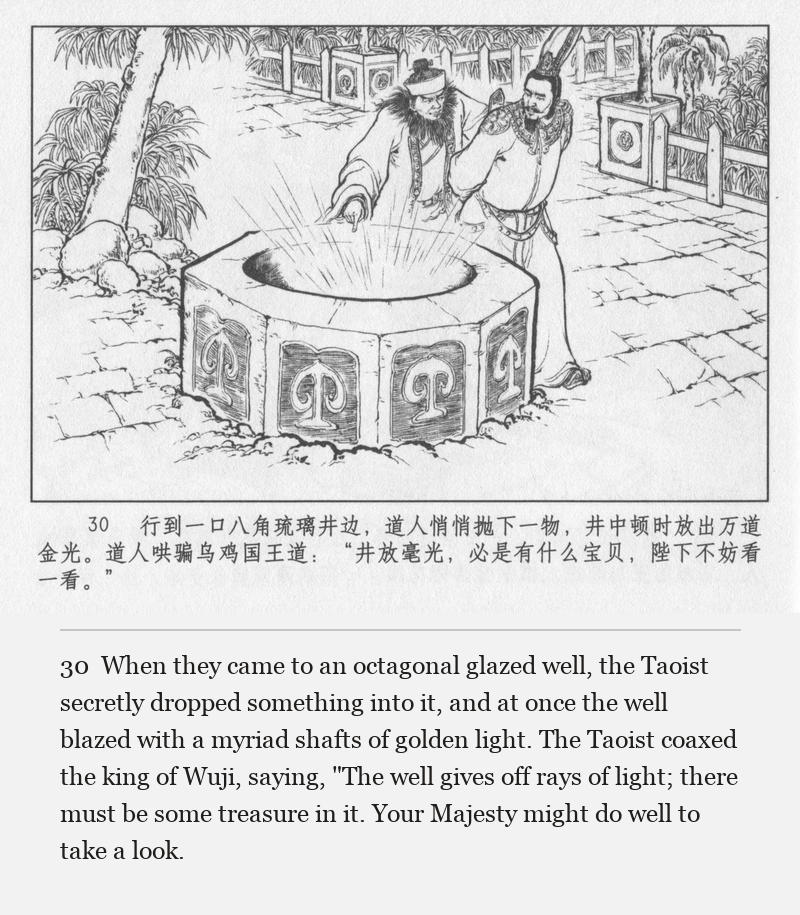
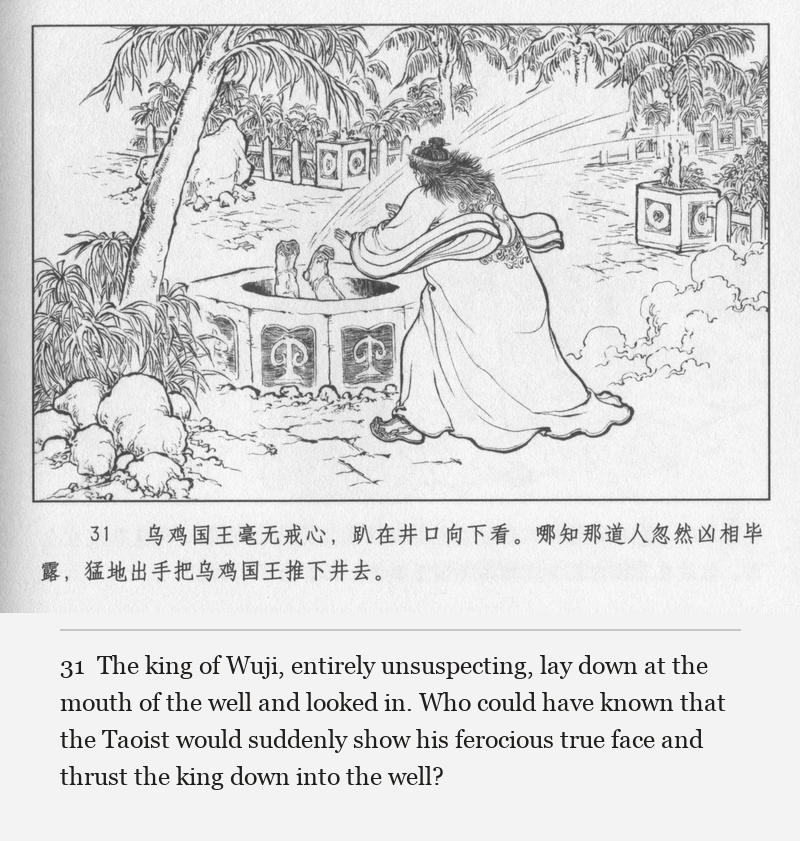
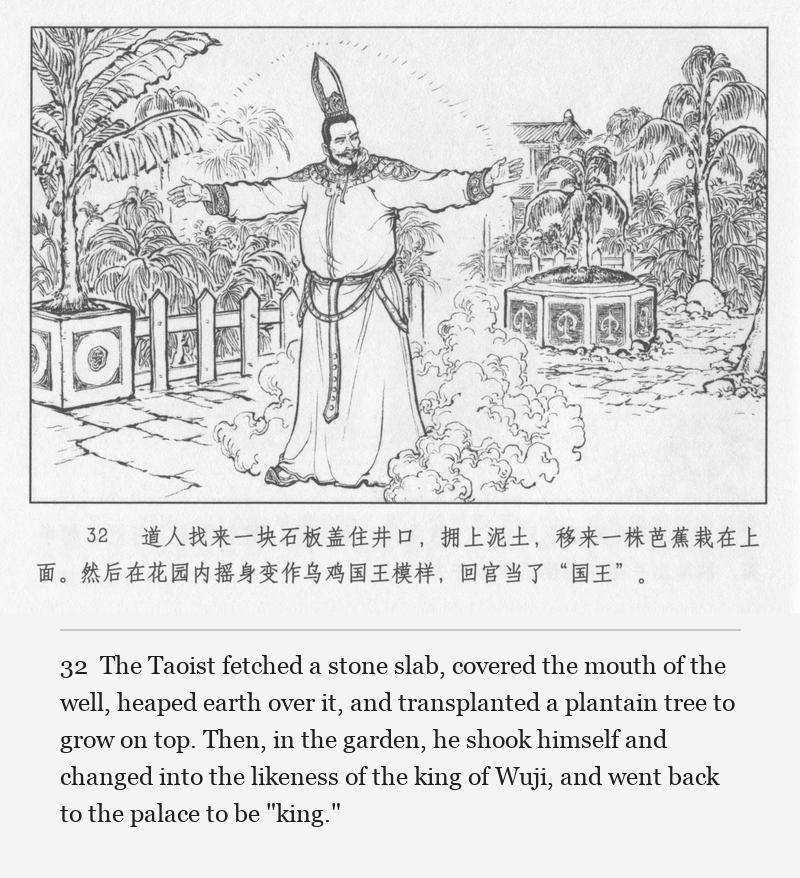
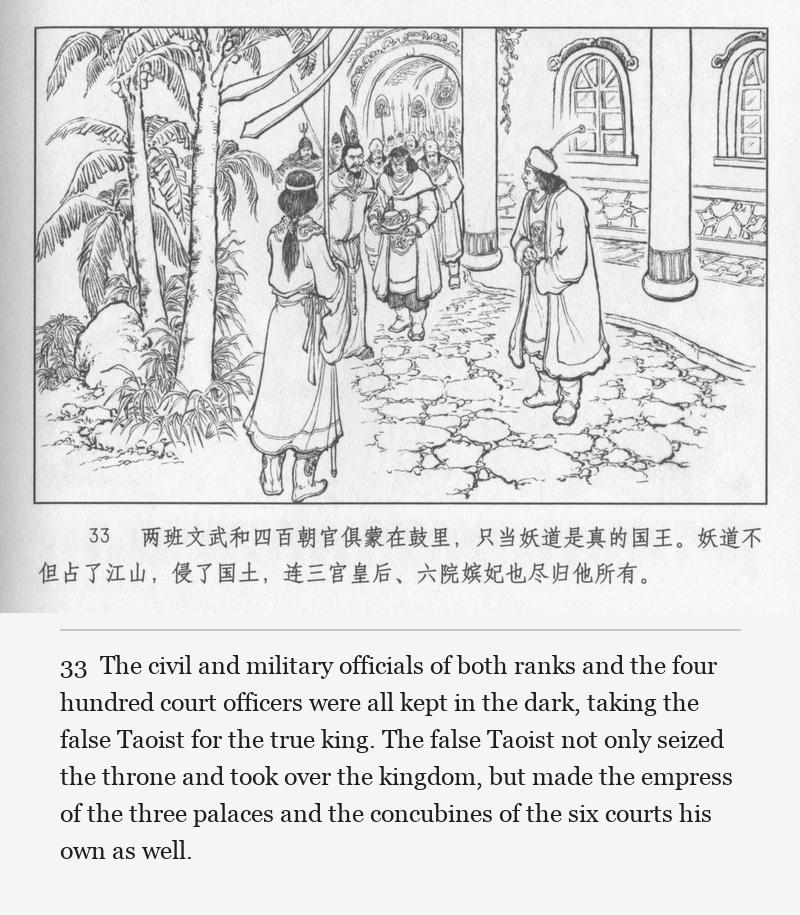
When the wind had passed, drowsiness came over the Tang Monk. He lay forward upon his reading desk, heavy-headed, half asleep and half awake, neither sleeping nor waking, and in his ears he heard a cold wind soughing and moaning outside the window. Suddenly the Tang Monk heard someone outside the meditation hall call softly, "Master!" He raised his head and saw a man standing in the doorway, tears falling from his eyes and his whole body dripping wet. The Tang Monk thought a monster had come and gave a stern warning. The man said respectfully, "Do not be afraid, Master. I am no demon or fiend. Look at me once more, and carefully." The Tang Monk looked intently and saw that the man wore a sky-piercing crown, a girdle of green jade, a reddish-yellow robe embroidered with flying dragons and dancing phoenixes, and cloud-patterned carefree shoes, and held in his hand a white jade tablet arrayed with the stars. His face was like that of the Emperor of Long Life of the Eastern Peak, his bearing like the Lord of Civilization of Wenchang. The Tang Monk rose and asked in astonishment, "Of which dynasty are you, Your Majesty?" He stepped forward to take his hand, but caught only empty air. The Tang Monk turned back and sat down; the man was still in the same place. Doubting in his heart, the Tang Monk asked again, "Your Majesty, of what kingdom are you king, of what state the lord? Is it that your realm is unsettled and slanderous ministers oppress you, so that you fled here in the middle of the night?" Tears fell from the man's eyes, and he began to tell the Tang Monk the story of long ago... It turned out that forty li from this place lay the Kingdom of Wuji. Five years earlier that country had suffered a great drought: the rivers dried up and the wells ran dry, the harvest failed utterly, and the people of Wuji were plunged into misery. Countless numbers died of hunger and thirst. The king of Wuji, pitying his people, opened the treasury and distributed grain to relieve the disaster. But the drought dragged on; the granaries of Wuji were emptied, money and grain were exhausted, the salaries of the civil and military officials were suspended, and even the royal table had no meat. The king shared the hardships of his people and burned incense in prayer day and night, yet not a single drop of rain fell from the sky. Then one day a Taoist arrived who said he had cultivated the Way on Mount Zhongnan and could summon wind and rain and turn stone into gold. The king of Wuji, like a man long ill who will try any doctor, did not inquire into his origins but at once invited him to mount the altar and pray for rain. The Taoist mounted the high altar, took up his sword and his talismans, and began his rites. At the sound of his command token, torrential rain poured from the sky in an instant, and did not stop until the water on the ground was more than three feet deep. Seeing that the Taoist had saved the people of the whole country, the king of Wuji was both delighted and grateful. He not only rewarded the Taoist richly but exchanged eightfold bows with him and became his sworn brother. In ordinary days the king and the Taoist slept and ate together in the closest intimacy, and the Taoist enjoyed a king's treatment. Two years passed in this way. One day in the warmth of spring, when the red apricots and tender peaches were bursting into bloom and the scenery was most delightful, the king of Wuji took the Taoist by the hand to roam the royal garden, talking and laughing all the way. When they came to an octagonal glazed well, the Taoist secretly dropped something into it, and at once the well blazed with a myriad shafts of golden light. The Taoist coaxed the king of Wuji, saying, "The well gives off rays of light; there must be some treasure in it. Your Majesty might do well to take a look. The king of Wuji, entirely unsuspecting, lay down at the mouth of the well and looked in. Who could have known that the Taoist would suddenly show his ferocious true face and thrust the king down into the well? The Taoist fetched a stone slab, covered the mouth of the well, heaped earth over it, and transplanted a plantain tree to grow on top. Then, in the garden, he shook himself and changed into the likeness of the king of Wuji, and went back to the palace to be "king." The civil and military officials of both ranks and the four hundred court officers were all kept in the dark, taking the false Taoist for the true king. The false Taoist not only seized the throne and took over the kingdom, but made the empress of the three palaces and the concubines of the six courts his own as well.